Off-The-Path Land for Campers & Atv
San Luis, CO 81152
Costilla County, Colorado
Lot Description
Some land is meant to be easy to reach.
Other land is meant to be reached on purpose.
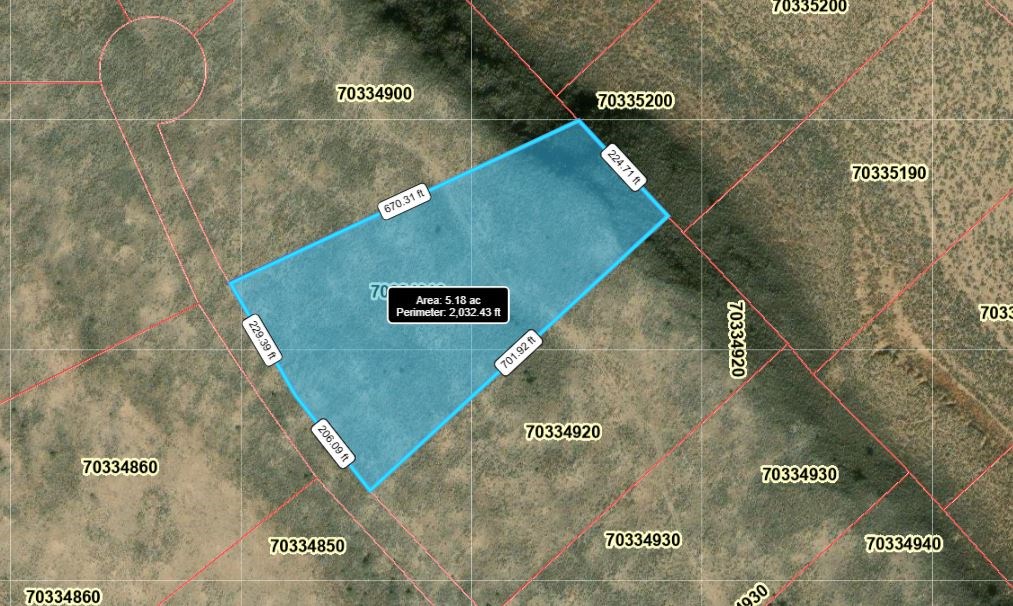
This 5.15-Acre parcel sits on a ridge outside Blanca, Colorado, and it's the kind of place people look for when they value isolation, views, and terrain more than convenience. You don't stumble onto land like this. You plan for it.
This is one of those properties that's easier to understand on video.
Message me and I'll send the drone footage.
There's no drive-up access to the ridge.
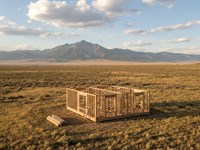
In fact, even our photographer couldn't reach it on foot and had to fly the drone.
Property description
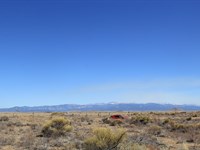
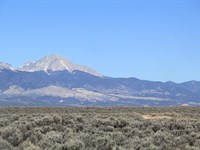
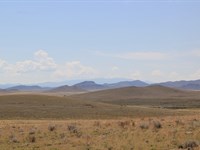
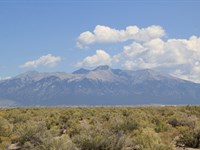
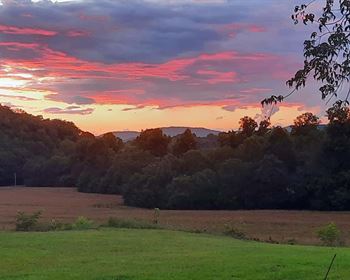
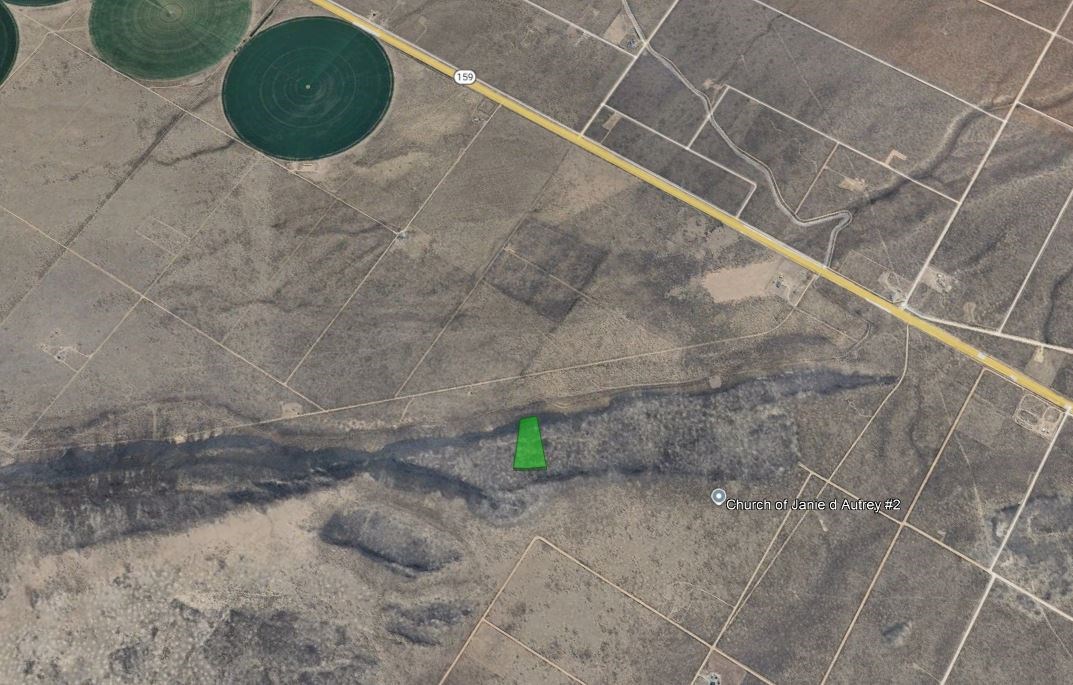
The property sits on elevated ridge terrain with rolling, hilly topography and sparse high-desert vegetation. From the ridge, you get wide, open views across the surrounding valley and toward the Blanca Peak area.
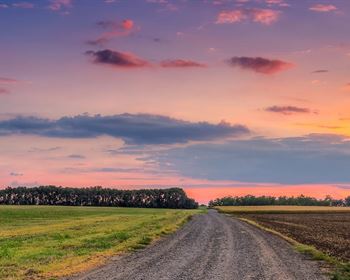
The closest approach is from the Modoc area to the south, but final access to the property itself is by ATV or similar equipment. Existing tracks and the natural terrain make this well-suited for riders who are already comfortable navigating backcountry land.
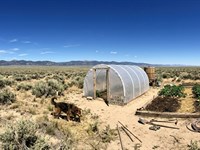
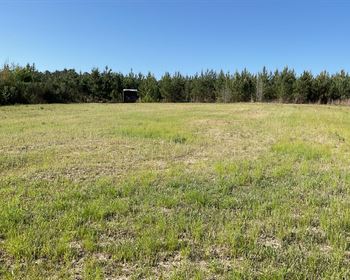
This is raw, undeveloped property. No structures, no improvements, and no nearby traffic. Quiet, exposed, and open.
Access matters here.
There's a right way to approach the ridge and a couple you don't want to use. Message me and I'll walk you through it.
Recreational use
This land is best suited for recreational use, including:
ATV, quad, or dirt bike access
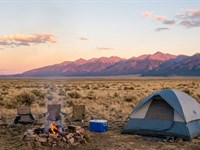
Backcountry-style camping
A private ridge-top destination or basecamp
Short stays focused on riding, exploring, and being off-grid
Camping is allowed for up to 14 days per 3-month period under county rules. Longer or permanent use would require permits, septic, and significant planning, which is why most buyers are drawn to this parcel strictly for recreational purposes.
If you're looking for easy build access or a drive-up campsite, this is not a good fit.
If you enjoy effort, isolation, and terrain, it likely is.
Practical details
Acreage: 5.15 acres
County: Costilla County, Co
Zoning: Estate Residential
Access: Dirt road nearby; final access by Atv
Utilities: Off grid (solar required)
Terrain: Hilly ridge terrain with sparse vegetation
Annual taxes: About $127
HOA: None
Pricing & financing
Cash price: $8,500
Owner financing available:
$200 down
$170 per month for 60 months
$250 documentation fee
No banks and no credit check
Simple terms for buyers who want flexibility and control.
Next step
This kind of land isn't for everyone.
If you understand why access and terrain matter, you'll recognize it.
Send a message and I'll help you confirm whether this property fits how you actually plan to use it.
Location: The San Luis Valley
The San Luis Valley is one of the largest high-altitude basins in the world - roughly 8,000 square miles of flat valley floor surrounded by two mountain ranges. The Sangre de Cristo Mountains form the eastern wall. The San Juan Mountains rise to the west. The Rio Grande runs through the middle. The whole thing sits between 7,500 and 8,000 feet above sea level.
People who have never been here sometimes picture a dry, brown nothing. That is not quite right. The valley floor is high desert - short grasses, sage, and rabbitbrush as far as you can see in most directions - but the mountains at the edges are forested and streaked with snow well into spring. The contrast is part of what makes this place feel unlike anywhere else in Colorado.
The climate runs on its own schedule. The valley gets around 7 to 10 inches of precipitation annually, most of it arriving as afternoon thunderstorms in July and August. There are more than 300 sunny days a year. The air is dry. Summers are warm during the day and cool enough at night to sleep without air conditioning. Winters bring cold and snow, but the combination of low humidity and consistent sunshine means roads clear faster here than in most of the state.
The daily temperature swing is significant. A summer day might reach 80 degrees by early afternoon and drop to 45 by midnight. If you are coming from a humid climate, the dryness takes some adjustment - in a good way, most of the time.
This is not the green, forested Colorado of the mountain brochures. The beauty here is different: big sky, long views, quiet evenings, and a quality of light that photographers and painters have been coming to the valley to chase for generations. People who fall in love with it tend to fall hard. People who do not usually figure that out on their first visit, which is one reason we suggest going to see the land before you finalize your purchase.
Location: Costilla County
Costilla County sits in the southern San Luis Valley and carries more history per square mile than most places in Colorado.
In 1843, the Mexican government granted nearly 1.4 million acres in this region to Narciso Beaubien and Charles Bent under what became known as the Sangre de Cristo Land Grant. The grant changed hands over the decades that followed, but the people who had already settled the valley - Hispanic families with roots running back to New Mexico and, through New Mexico, to colonial Spain - stayed. They built acequia systems to bring snowmelt from the mountains to their fields. They established communal grazing land. Their descendants still live here.
San Luis, founded in 1851, is Colorado's oldest continuously occupied town. The San Luis People's Ditch, which still carries water to farms in town, is the oldest continuously used water right in Colorado - senior to every water claim that came after it. La Vega, the communal pasture on the edge of San Luis, is the only remaining common land of its kind in the United States. It is still used by local families under rights that date to the original land grant.
In 2009, Congress designated the region as the Sangre de Cristo National Heritage Area, recognizing the cultural significance of the valley's Hispano heritage and its agricultural traditions.
Property taxes in Costilla County are among the lowest in Colorado. The county is clear about its rules and generally accessible to landowners who want to understand them. For questions about zoning, you can call Costilla County Planning and Zoning at.
Location: San Luis Valley Ranches
San Luis Valley Ranches is one of the larger subdivisions in the valley, with thousands of parcels ranging from 5 to 40 acres. Most lots sit on gently rolling high-desert grassland between 7,700 and 8,200 feet elevation. The subdivision spans several units, each with its own character, but the overall feel is consistent: open country, wide spacing between neighbors, and room to breathe.
Roads within Slvr are maintained dirt and gravel. Access is straightforward from Highway 160, and most parcels can be reached in a standard vehicle during dry conditions. Spring mud season - typically April through May - can make high-clearance or four-wheel drive the better choice.
People who own in Slvr run the full range: full-time residents who have built homes here, weekenders who camp or use a trailer a few times a year, buyers who purchased land years ago and are still figuring out their timeline, and investors holding for the long term. It is a quiet, low-traffic neighborhood. People wave when they drive by. If you ask a neighbor who drilled their well or who installed their septic, they will usually tell you.
The subdivision attracts people who want space, low carrying costs, and the flexibility to build on their own timeline. There is no HOA telling you what color to paint your door or when to mow your lawn. There are also no shared amenities - no clubhouse, no pool, no groomed trails. What you get is your parcel, your neighbors at a respectful distance, and the San Luis Valley stretching in every direction.
Building And Land Use
Estate Residential zoning in Costilla County allows a range of building options:
Site-built frame homes are allowed with a 600 square foot minimum and permanent foundation required. Manufactured homes are permitted if they are 1976 or newer, state-certified, and placed on a permanent foundation. Modular homes follow the same foundation requirement. Short-term rentals like Airbnb and Vrbo are allowed as long as all structures meet zoning, building, and occupancy permit requirements.
RV occupancy is permitted for up to 14 days within any 3-month period without a permit. Longer stays are allowed with an approved septic system and a temporary long-term camping permit valid for 90 days and renewable up to 5 times. Tent camping follows the same 14-day rule without a permit.
What is NOT allowed: tiny homes below 600 sq ft, container homes, pallet structures, or permanent dwellings without a foundation.
Build timeline: Construction must be completed within 3 years from the date the first permit is issued. There is no deadline to pull the permit in the first place - you can buy the land now and wait until your timing is right before starting the permit process.
Owner-building: From what Costilla County Planning and Zoning has told us, owner-building appears possible. The county permit and inspection process still applies, but you are not required to hand the full project to contractors.
Permit sequence: Minor development/road access permit first (approximately $300), then septic permit and soil evaluation (approximately $500), then building permit. Building permit cost depends on structure size. Always verify current fees directly with Costilla County Planning and Zoning.
Utilities And Off-Grid Planning
Water: No municipal water reaches Slvr. A private well or alternative water source is required. Well drilling is typically possible on 35+ acre parcels, and some smaller parcels may qualify if they were subdivided before the 35-acre exemption rule. Always verify eligibility with the Colorado Division of Water Resources at using your specific parcel number.
Typical well depths in Slvr range from 150 to 400 feet. Full well system including casing, pump, pressure tank, and hookup: budget $15,000 to $30,000 depending on depth and complexity. Cistern and water hauling are practical interim options - Costilla County requires cisterns to be at least 500 gallons and buried at sufficient depth to prevent freezing.
Septic: An On-Site Wastewater Treatment System is required for any permanent dwelling. Minimum tank size is 1,250 gallons (concrete or plastic). County permit, soil evaluation, and inspection are all required. Budget $5,000 to $10,000 for a standard installation. From what the county told us, owner installation appears possible, but the permit and inspection process still applies.
Power: San Luis Valley Rural Electric Cooperative (Slvrec) covers this area at. Most Slvr parcels are not currently connected to the grid. Off-grid solar plus generator is the standard setup. At this elevation with 300+ sunny days per year, the solar resource is strong. A mid-size system (3 to 5 kW with battery storage) typically runs $15,000 to $30,000 installed. LiFePO4 battery technology handles the temperature swings at this elevation reliably.
Other Utilities: Propane delivery available from multiple valley suppliers. Starlink works well anywhere in Slvr with clear southern sky, typically delivering 100+ Mbps. Cell coverage varies by carrier - Verizon and At&T are usable but not strong enough for heavy video without a signal booster. No county trash pickup - several private services available.
Camping While You Own
One of the biggest advantages of owning in Slvr is that you can start using your land immediately while you plan your build. The 14-days-per-quarter camping rule means you can visit seasonally without any permits. Many families from the East Coast discover this is exactly what they wanted - a place to take the kids camping in the summer without crowded campgrounds or reservation hassles.
Picture this: Load the RV or set up tents on your own 5 acres. The kids can run around without bothering anyone. You can have a campfire without checking fire restrictions at three different agencies. You wake up to mountain views and coffee without neighbors 10 feet away. This is the kind of space and freedom that simply does not exist in most of the country.
For families building toward retirement, the camping phase often becomes the favorite part. No pressure to build immediately, no mortgage payments, just the experience of owning something real that you can drive to and use. Some buyers camp for years before they build anything permanent, and many say those camping years were when they fell in love with the valley.
If you want longer stays while planning your build, the long-term camping permit process allows up to 90 days at a time with an approved septic system. This gives you a legal pathway to stay on your land for extended periods while you work through building permits and construction.
History: The Sangre De Cristo Land Grant
This corner of Colorado is not like the rest of the state. The Anglo settlement that defines most of Colorado's history arrived here much later than it did in Denver or along the Front Range. By the time the United States acquired this territory through the Treaty of Guadalupe Hidalgo in 1848, the San Luis Valley already had generations of Hispanic settlers who had built farms, dug irrigation ditches, and established communities rooted in Spanish colonial tradition.
The Sangre de Cristo Land Grant, issued in 1843 by the Mexican government, covered nearly 1.4 million acres in what is now southern Colorado. Under the grant's terms, settlers were entitled not just to their individual plots but to communal access - shared pastures, water rights, firewood-gathering grounds. Those traditions shaped the county's character in ways that are still visible.
San Luis, founded in 1851, is Colorado's oldest continuously occupied town. The San Luis People's Ditch, completed in 1852, holds the oldest continuously exercised water right in Colorado. La Vega - the common pasture on the edge of San Luis - is the only remaining communal land grant pasture in the United States, still in use by the herederos (heirs of the original grant) today.
The acequia tradition - community-managed irrigation channels maintained by shared labor and governed by elected mayordomos - is still practiced in the valley. These are not historical reenactments. They are living systems.
In 2009, Congress designated the region as the Sangre de Cristo National Heritage Area, recognizing the cultural weight of what has survived here.
Owning land here means joining a place with deep roots. That is worth knowing, and worth respecting.
Public Lands And Recreation
Great Sand Dunes National Park and Preserve (35-45 miles) The tallest dunes in North America sit at the base of the Sangre de Cristo Mountains, rising to 750 feet above the valley floor. The park is also designated an International Dark Sky Park, which means the star quality on a clear night ranks among the best in Colorado. Sandboarding and sand sledding are the obvious draws, but the park's backcountry offers hiking and backpacking that most visitors never reach.
Alamosa National Wildlife Refuge (45-55 miles) One of the better birding areas in the southern Rockies. Sandhill cranes stage here during their spring and fall migrations. The refuge also hosts bald eagles, great blue herons, white-faced ibis, and a variety of raptors year-round.
Monte Vista National Wildlife Refuge (65-75 miles) The Monte Vista Crane Festival, held each March, draws thousands of visitors to watch an estimated 25,000 sandhill cranes move through the valley.
Zapata Falls (40-50 miles) A short hike from the parking area leads to a narrow slot canyon with a waterfall tucked inside. This is one of the less-visited attractions in the region - worth knowing about.
Wolf Creek Ski Area (about 2.5 hours west) Wolf Creek averages more than 430 inches of snow per year - among the highest snowfall totals of any ski area in Colorado. The skiing is genuine, not manufactured, and the resort has stayed small enough to avoid the lift lines that define the Front Range ski towns.
Rio Grande National Forest Millions of acres of wilderness access within an hour of most Slvr parcels. The Sangre de Cristo Wilderness offers everything from day hikes to week-long backpacking trips in some of the least crowded high country in Colorado.
Hunting, Wildlife, And Gmu 83
Most Slvr parcels sit within Colorado Game Management Unit 83, which covers a large section of the San Luis Valley and the eastern foothills of the Sangre de Cristo Mountains. GMU 83 holds elk, mule deer, and pronghorn antelope. Over-the-counter tags are available for certain species and seasons - confirm current availability with Colorado Parks and Wildlife.
The valley floor where most Slvr parcels sit is pronghorn country. Mule deer move through the grassland edges seasonally. Elk range is more concentrated in the foothills, though they come down to the valley in early winter.
Black bear and mountain lion are present in the foothill areas. On the valley floor itself, coyotes and bobcats are the most commonly seen large predators. Jackrabbits, cottontails, and prairie dogs are everywhere.
The birdlife in the San Luis Valley is one of its underappreciated assets. Sandhill cranes move through in March and October in numbers that are hard to describe accurately without sounding like you are overstating it. Golden eagles are a regular sight. Red-tailed hawks, prairie falcons, burrowing owls, and great horned owls are all present. The Alamosa National Wildlife Refuge channels are within reasonable driving distance for waterfowl and wading birds.
Smith Reservoir State Wildlife Area and Sanchez Reservoir both offer walk-in fishing access within a practical drive. The Rio Grande runs through the valley corridor and provides additional fishing options, including access to quality trout water in the reaches above Alamosa.
Dark Skies And Astrophotography
Great Sand Dunes National Park's International Dark Sky Park designation covers the area around most Slvr parcels. On a clear, moonless night, the Milky Way is visible to the naked eye from the ground. The Andromeda Galaxy - 2.5 million light-years away - can be seen without binoculars. The Perseid meteor shower in August and the Geminid shower in December put on genuine shows from land at this elevation and this far from city light pollution.
The Bortle scale rating for the southern San Luis Valley runs between Class 2 and Class 3. For reference, Class 1 is the darkest possible sky. Most people in the United States have never seen sky darker than Class 5 or 6. Astrophotographers have relocated to the valley specifically for the seeing conditions.
The character of this land is worth naming plainly. This is not groomed Colorado. There are no ski resort villages nearby, no craft cocktail bars, no concierge services. The valley is open country - long distances between things, quiet evenings, slow traffic on two-lane roads. A property like this asks you to be a little more intentional about how you use your time. That is a feature for the right buyer, and it is worth knowing about before you buy.
Water And Fishing
The Rio Grande runs through the San Luis Valley corridor approximately 30 to 40 miles west and north of most Slvr parcels. The river provides a range of fishing conditions depending on where you access it - from the Gold Medal sections above Creede (about two hours away) to the more accessible reaches near Alamosa where conditions are quieter and less crowded than anything on the Front Range.
Smith Reservoir State Wildlife Area is a walk-in fishing access point within a practical drive. Sanchez Reservoir, closer to the New Mexico border, is another option for fishing in a more remote setting. Mountain Home Reservoir rounds out the local stillwater options.
The Conejos River, south of Alamosa, is one of the more productive and scenic rivers in southern Colorado - a quieter alternative to the more famous streams near Creede and South Fork.
For serious trout fishing, the Gold Medal waters above Creede on the upper Rio Grande are the destination. Rio Grande rainbow and brown trout in these sections are not small fish. The drive is about two hours from most Slvr parcels, and the fishing is worth it.
Investment Context
Raw land in the San Luis Valley has tracked with several long-term trends worth noting honestly.
Colorado's population has grown roughly 15% per decade for the past 30 years, with most growth concentrated along the Front Range. As those areas become more expensive and crowded, buyers have begun looking further out for recreational land and retirement property. The shift to remote work during 2020-2022 accelerated this pattern.
Water scarcity across the Southwest is pushing people toward regions with more reliable snowpack and surface water. The San Luis Valley, fed by snowmelt from two major mountain ranges, is better positioned than most Western regions on this front.
Costilla County remains one of Colorado's more affordable rural land markets. That gap between Front Range prices and valley prices has widened over the past decade, which creates opportunity for patient buyers.
The honest caveats: raw land is illiquid compared to developed real estate. Short-term appreciation is uncertain and depends on factors outside your control. Comparable sales data in rural areas is limited, which makes precise valuation difficult. Land banking works best for buyers who can afford to hold for 10+ years without needing the cash.
But for buyers who understand those limitations, owning land in a stable, low-tax county with clear rules and growing regional demand has historically proven sensible.
Annual Ownership Costs
Property taxes in Costilla County are among the lowest in Colorado. Most 5-acre Slvr parcels run $75-$150 annually in taxes - about $6-$12 per month. No HOA fees, no special assessments, no metro district taxes, no mandatory road maintenance fees.
Total annual ownership cost before development: approximately $75-$150 depending on the specific parcel's assessed value.
That is one of the lowest carrying costs you will find on legally accessible land in Colorado.
Owner Financing Terms
The point of owner financing is that it removes the bank from the process entirely. No credit check, no income verification, no debt-to-income calculations. The land itself is the collateral.
Here's how it works step by step:
Contact us and confirm the parcel is available
You pay the down payment plus a $250 document fee
We send you the land contract
You can start enjoying the property recreationally while making monthly payments
At payoff, we record a warranty deed in your name with Costilla County
You own the land free and clear and can start building
No banks, no credit bureaus, no prepayment penalty. If payments stop, the contract ends and the land returns to us - but no credit reporting is ever involved. That is how owner financing differs from a mortgage.
The beauty of this system is that you can start using your land immediately - camping, exploring, planning your build - while you're still paying it off. Many families spend years enjoying weekend camping trips and seasonal visits before they ever break ground on a permanent structure.
If the standard terms do not quite fit your situation, reach out and tell us. We are real people and we would rather find terms that work than lose a buyer who is genuinely ready to start.
Frequently Asked Questions
Is there a well on the property? No existing well. Well drilling may be possible depending on the specific parcel and its subdivision history. Always verify eligibility with the Colorado Division of Water Resources at. Well application approximately $100. Full system budget $15,000-$30,000.
Can I install my own septic? From what Costilla County told us, owner installation appears possible. County permit, soil evaluation, and inspection still required. Minimum 1,250-Gallon tank. Budget $5,000-$10,000.
Can I build it myself without contractors? From what Planning and Zoning told us, owner-building appears possible. County permit and inspection process still applies, but you are not required to hand the project to contractors.
Can I live in an RV while building? Yes, with approved septic and long-term camping permit from Costilla County. Without those permits, RV use limited to 14 days every 3 months.
Can I run an Airbnb? Yes. Short-term rentals are permitted in Estate Residential zoning without a special-use process.
Does the property require 4Wd? A standard SUV or truck reaches most Slvr parcels in dry and normal winter conditions. After heavy rain or spring snowmelt (typically April-May), high-clearance or four-wheel drive is the safer choice.
What happens at payoff? We record a warranty deed transferring the property to you, filed with Costilla County. You own it free and clear.
Can I pay it off early? Yes, with no prepayment penalty.
Honest Tradeoffs
What Slvr parcels are not:
Not an HOA subdivision with shared amenities or groomed roads
Not a mountain property - valley floor with mountain views
Not paved road access - maintained dirt/gravel, reliable in most conditions
Not walk-on buildable - well, septic, and building permit required before permanent structure
Not near a major city - Alamosa is a small regional hub, Denver and Santa Fe are 3-4 hours
Not for everyone - some people visit the San Luis Valley and cannot wait to leave. Others feel like they have come home.
The people who are happy owning here know what they signed up for. The people who are unhappy usually skipped a section like this one.
Lot Maps & Attachments
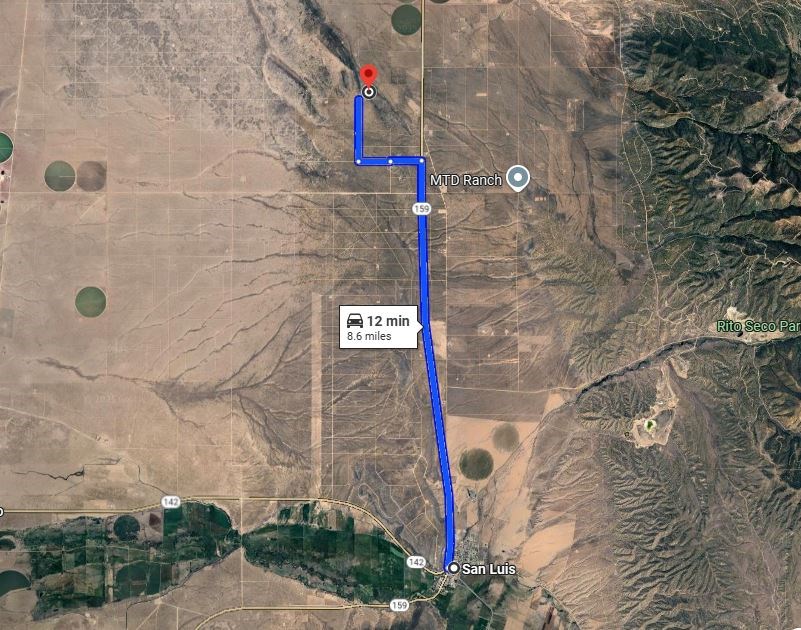
Directions to Lot
Take N Church Pl to CO-159 N/Main St
35 sec (0.1 mi)
Head toward E Church Pl
125 ft
Continue onto N Church Pl
417 ft
Turn right onto CO-159 N/Main St
? Continue to follow CO-159 N
7 min (6.5 mi)
Continue on Third St. Take Pueblo Ave to Modoc Ave
6 min (1.9 mi)
Turn left onto Third St
0.5 mi
Turn right onto Pueblo Ave
0.4 mi
Turn left
0.5 mi
Slight left onto Fifth St
253 ft
Turn right at the 1st cross street onto Modoc Ave
0.5 mi